

In a landmark moment for the art market, a compact yet profoundly impactful self-portrait by the trailblazing German artist Paula Modersohn-Becker has redefined her legacy, fetching a staggering €1.3 million ($1.5 million) at Grisebach auction house in Berlin. This sale, which occurred on November 28, 2025, not only quintupled the painting's low estimate but also more than doubled her previous auction record, signaling a surge in appreciation for female modernist artists long overshadowed in art history. The work, titled Selbstbildnis nach halblinks (Self-Portrait Looking Slightly Left) from 1906, was once confiscated by the Nazis as part of their infamous "degenerate art" campaign, adding layers of historical poignancy to its triumphant return to the spotlight.
Paula Modersohn-Becker, born in 1876 and tragically passing away at just 31 in 1907 from complications following childbirth, is increasingly recognized as one of the first modernist women painters. Her oeuvre, characterized by bold, introspective portraits—particularly of women and girls—challenged traditional representations and embraced raw emotional depth. Despite her short life, she produced over 700 paintings, many self-portraits that explored identity, femininity, and the human form with unflinching honesty. For decades, however, her contributions were marginalized, often relegated to the periphery of male-dominated narratives in Expressionism and early modernism. Recent institutional efforts, including a major 2022 retrospective at Frankfurt's Schirn Kunsthalle, have catalyzed a reevaluation, positioning her as a pivotal figure alongside contemporaries like Max Beckmann and Ernst Ludwig Kirchner.
The Auction Triumph: Details of the Sale
The auction at Grisebach, a premier venue for modern and contemporary art in Berlin, featured the self-portrait as part of a larger sale from the collection of Günter Bauer (1901–1968), a collector who actively sought to rehabilitate artists persecuted by the Nazis. Measuring a modest 10½ inches high, Selbstbildnis nach halblinks depicts Modersohn-Becker gazing slightly leftward, her expression a blend of introspection and resolve. The painting's intimate scale belies its monumental significance, capturing the artist's innovative approach to form and color that prefigured later modernist developments.

Image source: ARTnews.
Bidding was fierce, propelling the price far beyond expectations to €1.3 million including fees, sold to an anonymous private collector in Europe. This eclipses her prior record set in 2013 at the same auction house, where Auf einem Stuhl sitzendes Mädchen mit Kind auf dem Schoss vor Landschaft (A Girl Sitting on a Chair with a Child on Her Lap, In Front of a Landscape, ca. 1904) fetched €525,000 (approximately $714,000 at the time). Grisebach hailed the result as "a powerful testament to the emphatic recognition of Paula Modersohn-Becker’s work," reflecting broader market trends favoring female modernist artists amid growing institutional and collector interest.
The Bauer collection sale overall was a resounding success, surpassing its €3 million ($3.5 million) estimate to total €5.7 million ($6.6 million), with nearly 90 percent of lots sold. Other highlights included works by Ernst Barlach, Caspar David Friedrich, and Emil Nolde, which also exceeded estimates. A drawing by Käthe Kollwitz soared from a €30,000 ($34,800) starting bid to €215,900 ($250,600), underscoring the enduring appeal of Expressionist masters.
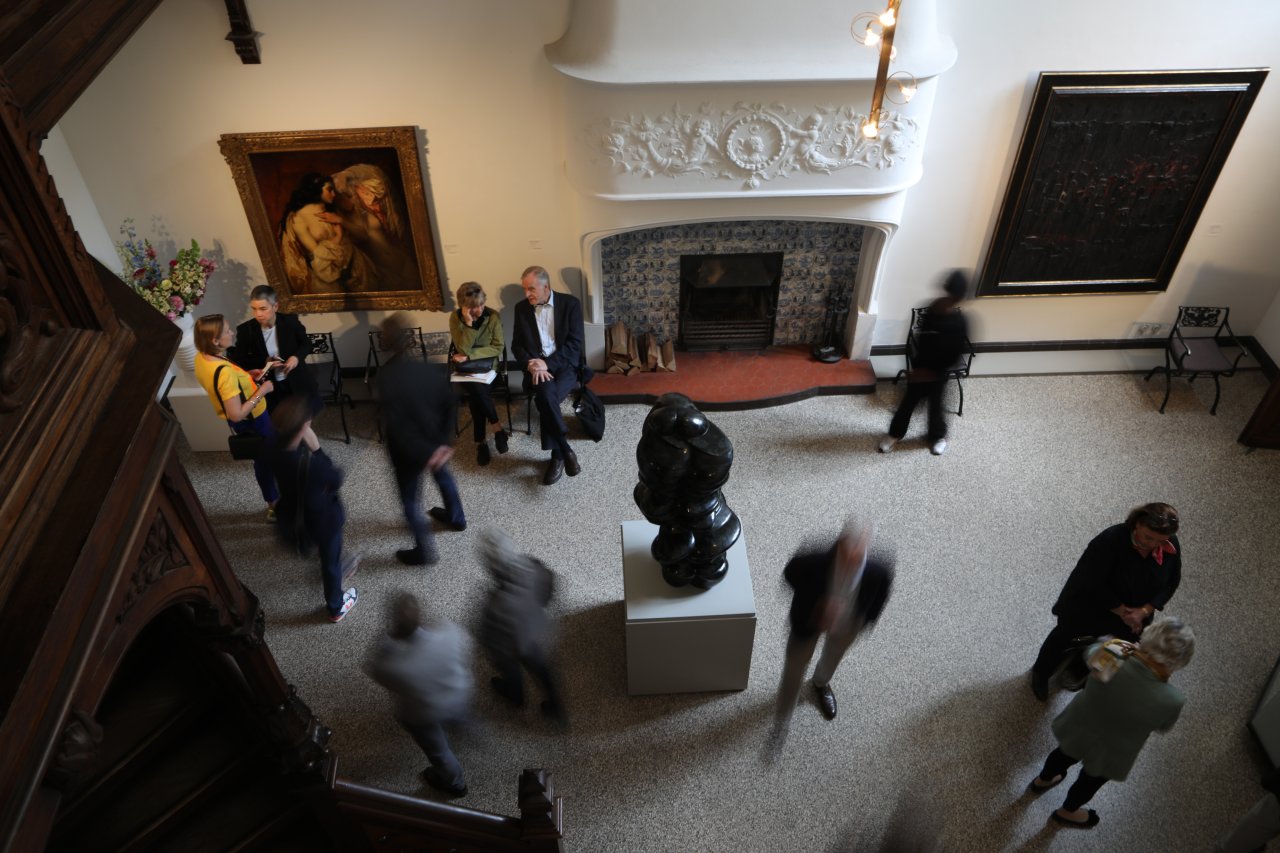
Image source: Grisebach Official Site.
Historical Context: From 'Degenerate' Seizure to Redemption
The painting's provenance adds a compelling narrative of resilience and redemption. Originally housed in Lübeck's St. Annen Museum, it was seized in the 1930s under the Nazi regime's purge of "degenerate art"—a label applied to over 20,000 works deemed incompatible with Aryan ideals. This campaign, epitomized by the 1937 Munich exhibition Entartete Kunst (Degenerate Art), targeted modernists for their perceived moral and racial corruption, often associating them with Jewish or Bolshevik influences.
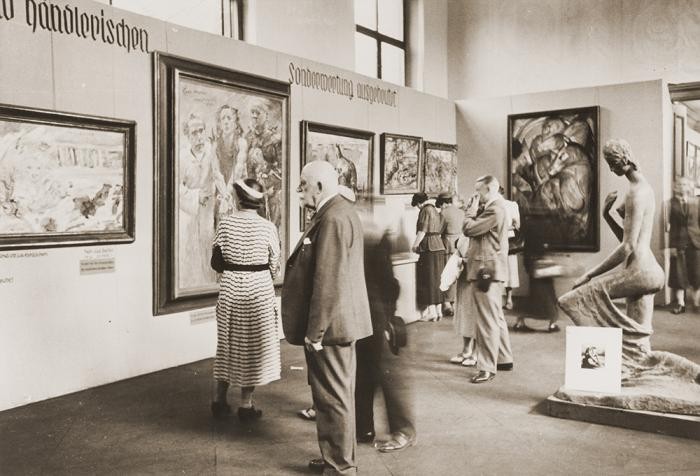
Image source: United States Holocaust Memorial Museum.
Post-seizure, the self-portrait entered the collection of Günter Bauer, a lignite industry executive who defied the regime by acquiring confiscated artworks through official channels. Bauer, imprisoned from 1944 to 1945 for his dissenting views, later served in post-war German government roles. His collection, which included pieces by Beckmann, Kirchner, and Kollwitz, represented a deliberate effort to preserve and honor persecuted artists. Modersohn-Becker's work, with its unidealized depictions of the female form, exemplified the very qualities the Nazis reviled—innovation over classical perfection.
This historical backdrop enhances the painting's value, linking it to broader themes of cultural resistance and feminist reclamation. As biographer Diane Radycki notes, Modersohn-Becker was a pioneer, creating the first known nude self-portraits by a woman artist. Her time in Paris, influenced by Paul Cézanne and Paul Gauguin, infused her style with post-Impressionist elements, while her Worpswede artists' colony roots grounded her in German rural life.
Renewed Institutional and Market Recognition
Modersohn-Becker's resurgence is evident in recent acquisitions and exhibitions. In 2017, New York's Museum of Modern Art (MoMA) and Neue Galerie jointly acquired a 1907 self-portrait, donated by ARTnews Top 200 Collectors Debra and Leon Black—the first by the artist in a U.S. museum. Her works have graced venues like Munich's Haus der Kunst, Lenbachhaus, Japan's Museum of Modern Art in Hayama, and Cologne's Museum Ludwig.
While she explored landscapes and still lifes, her core focus on female portraits—often raw and unadorned—resonates today amid discussions of gender representation in art. The Grisebach sale aligns with a market shift, where female artists like Georgia O'Keeffe and Frida Kahlo command premium prices, reflecting collector demand for diverse narratives.
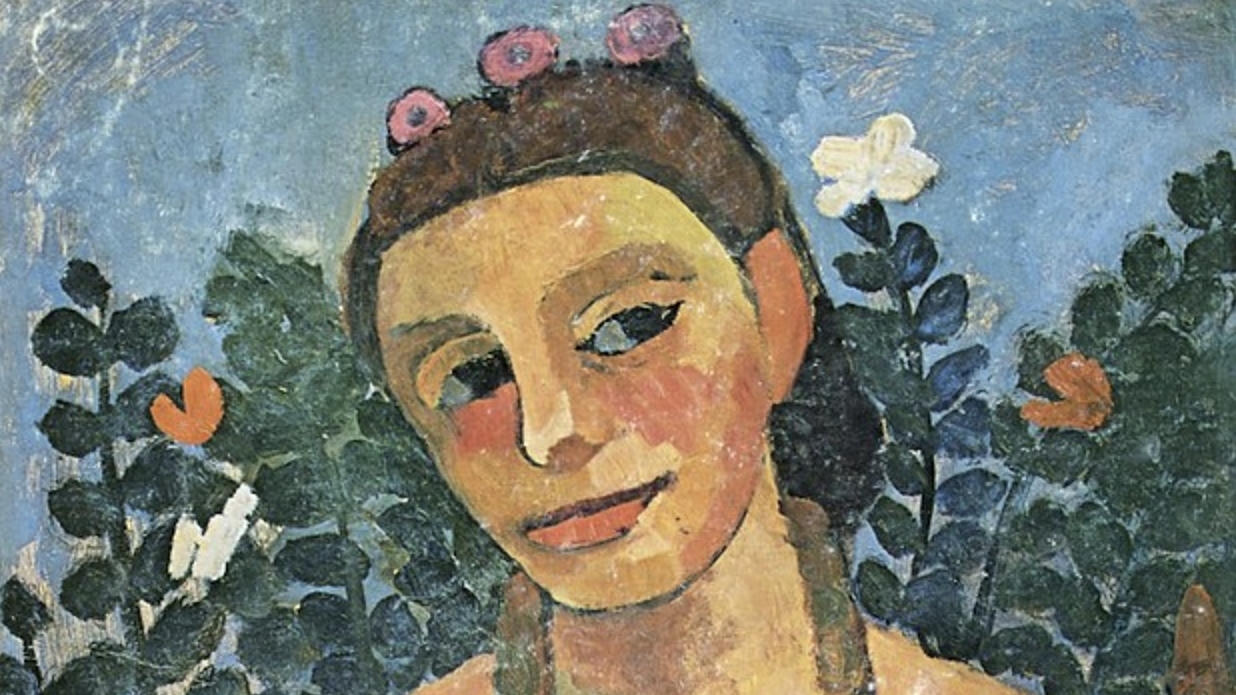
Image source: Smarthistory.
The Broader Implications for the Art Market
This record-breaking sale underscores the art world's evolving priorities, with increased valuation of underrepresented voices. As institutions and collectors prioritize inclusivity, Modersohn-Becker's story—from Nazi suppression to auction triumph—serves as a beacon for ongoing efforts to rewrite art history. Future exhibitions and sales will likely further elevate her status, ensuring her place among modernism's greats.
FAQ
What was the sale price of Paula Modersohn-Becker's self-portrait? The painting sold for €1.3 million ($1.5 million) including fees at Grisebach, more than doubling her previous auction record.
Why was the painting labeled 'degenerate' art? It was seized by the Nazis in the 1930s as part of their campaign against modern art, which they deemed morally corrupt and un-Aryan, as detailed in the Degenerate Art exhibition.
Who owned the painting before the auction? It was part of the collection of Günter Bauer, a collector who acquired works by persecuted artists to preserve their legacies during and after the Nazi era.
What is Paula Modersohn-Becker known for? She is celebrated as one of the first modernist women painters, focusing on bold self-portraits and depictions of women and girls, influencing Expressionism.
How does this sale compare to her previous record? It more than doubles the 2013 record of €525,000 for another painting at Grisebach, highlighting growing market interest in female modernists.
Where has Modersohn-Becker's work been exhibited recently? Her pieces have appeared at venues like the Schirn Kunsthalle in 2022, MoMA, Neue Galerie, and Museum Ludwig.
0 comments